
 tarafından hakan3112
 Surprising fact: logging into an exchange is often the single moment when the majority of preventable losses occur, whether through phishing, credential reuse, or rushed KYC. For US-based crypto traders who treat sign-in as a routine step, that routine contains several layered mechanisms—identity, device trust, session management, and withdrawal controls—each with trade-offs that change how safe and convenient your trading actually is.
This article walks through a real-world login case for an OKX user who wants to move from desktop charting to mobile margin trading and back, explaining how the pieces fit, where they fail, and what decisions traders should make to balance security, speed, and access to advanced features like derivatives or cross-chain swaps.
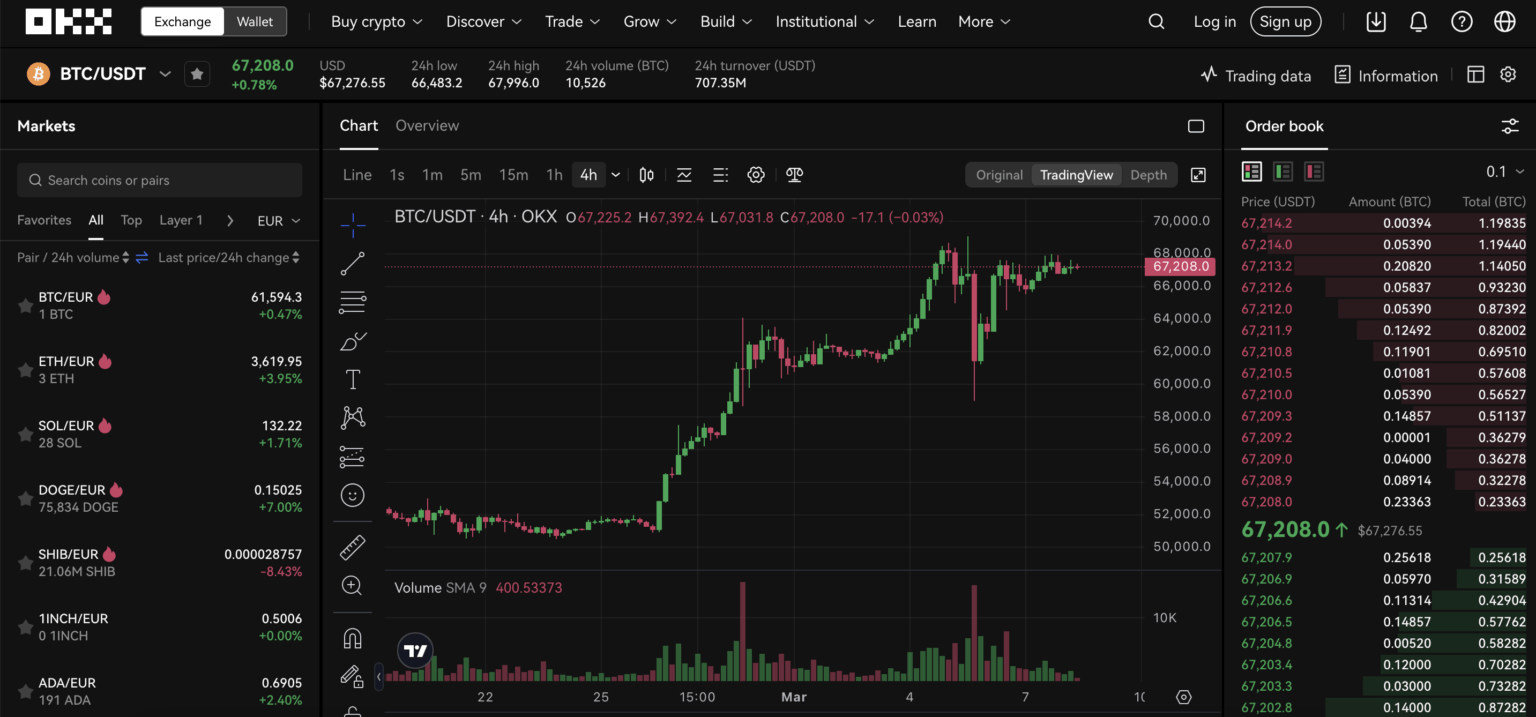
Case scenario: switching devices during a leveraged trade
Imagine you open a perpetual swap position on OKX from your laptop using TradingView charting and then want to add margin quickly from your phone because the market moved. The sign-in process you face determines whether you can react in seconds—or whether you must wait through an SMS 2FA delay or a liveness check that locks you out. Mechanistically, OKX separates the functions: account identity (the KYC-approved profile), authentication factors (password + 2FA/biometrics), and device/session trust (cookies, device fingerprints, and AI risk scoring). That separation is intentional: it lets the exchange enforce mandatory KYC and withdrawal controls while allowing frictionless read-only or non-sensitive actions on trusted devices.
For traders, the practical consequence is clear: you should design your device setup to match your trade style. If you scalp using high leverage (the platform supports up to 125x on certain derivatives), prioritize a low-latency trusted device with biometric login enabled. If you do occasional staking or NFT trades, a more locked-down workflow with hardware wallet integration and frequent 2FA may be preferable. The key trade-off is speed versus resilience to account compromise.
How the OKX sign-in mechanism works (mechanics, not slogans)
At its core, signing in does three things: verify identity, establish a secure session, and register device trust. OKX uses KYC to bind a government ID and a liveness facial check to an account; that’s identity verification. For authentication it enforces mandatory Two-Factor Authentication (2FA) options—SMS, Google Authenticator, or biometrics—combined with strong password hashing and military-grade encryption. For session and device trust, the platform layers AI-driven threat detection that scores each login attempt for anomalies (location, device, time) and may require additional proof or temporarily restrict actions like withdrawals.
These mechanisms interact. For example, a new device plus a large withdrawal can trigger a manual cold-wallet approval process because the exchange keeps over 95% of assets in offline multisig cold storage. That’s a security feature for custodial funds, but it also introduces latency for urgent flows. Understanding those interactions is how traders make good choices: you cannot simultaneously maximize immediate withdrawal speed from a device you’ve never used and minimize compromise risk.
Decision framework: when to prioritize speed, when security
Here are practical heuristics rooted in the platform’s design. If you run small, frequent trades and rely on margin or high leverage, register and harden one primary device (enable biometrics on mobile, keep Google Authenticator seeded, use hardware-backed keys where available). If you hold long-term positions, staking, or NFTs, split custody: keep large holdings in the non-custodial OKX Web3 wallet integrated with hardware devices and use the exchange account only for active trading. When moving between devices, expect friction: new-device logins often trigger additional 2FA or AI checks.
Note a boundary condition: KYC is mandatory and regionally enforced. For US traders, that means your identity attributes are tied to the account and recovery flows; losing access to your KYC-verified credentials can make remediation bureaucratic. Conversely, using the self-custodial Web3 wallet shifts custody risk onto you: lose the seed phrase and there’s no support desk to restore funds. Both systems trade off control versus recoverability.
Common failure modes and how to mitigate them
Phishing is the most common human-driven failure: fake login pages, cloned browser extensions, and social-engineering SMS requests. Mechanistically, phishing succeeds when attackers replicate the visual login flow and harvest credentials before 2FA. Mitigations: install the official browser extension or mobile app from trusted stores, enable hardware-backed authentication for critical actions, and never enter credentials from links in unsolicited emails. OKX’s AI threat detection reduces automated credential-stuffing success, but it does not stop credential reuse or user-clicked phishing.
Another failure mode is relying solely on SMS 2FA. SMS can be intercepted through SIM swaps; prefer an authenticator app or biometric methods where supported. For withdrawal safety, use withdrawal whitelist features and consider custodial limits: if you frequently need immediate large withdrawals, coordinate with institutional support or set up pre-approved addresses where possible.
What the recent delisting tells traders about platform hygiene
OKX recently delisted several low-liquidity spot pairs. That action is routine but instructive: exchanges prune listings to protect liquidity and market quality. For traders, that signals two things about login and account management. First, trading risk isn’t just price risk—it’s listing risk: an asset you can sign into and buy today might be harder to exit later if delisted or if liquidity vanishes. Second, keep an eye on maintenance notices on the exchange and ensure your device and contact details are up to date so alerts reach you before forced position changes or delisting windows.
In practical terms, a robust login posture includes notification hygiene: allow push notifications to your primary device, verify email and phone recovery channels, and occasionally check Proof of Reserves or platform notices to stay informed about systemic changes that affect your holdings.
Where the system breaks: limits and unresolved trade-offs
Three honest limitations deserve attention. First, on-chain transparency (Proof of Reserves) proves custody ratios but cannot certify operational security or guarantee against smart contract or protocol-level exploits in the DeFi components the exchange integrates with. Second, AI-driven risk scoring helps flag anomalies but can generate false positives during legitimate travel or VPN use, creating latency when you need speed. Third, the hybrid model—centralized exchange plus non-custodial wallet—creates cognitive load: traders must remember which assets are custodial versus self-custodial, and the recovery and threat models differ dramatically.
These are not design flaws so much as trade-offs in any modern trading ecosystem. The right decision depends on your tolerance for latency, willingness to self-custody, and need for rapid access to high leverage instruments.
Quick practical checklist before you sign in next time
1) Verify the URL or use the official apps and extension; never click suspicious links. 2) Use an authenticator app or biometrics rather than SMS when possible. 3) Register a trusted device for low-friction trading, and harden alternates for recovery. 4) Separate long-term holdings (consider Web3 self-custody with a hardware wallet) from active trading funds. 5) Enable withdrawal whitelists and review KYC details so recovery is straightforward if you lose access.
For step-by-step resources and an official login guide, see this platform-specific page on okx, which consolidates device and authentication notes relevant to US users.
What to watch next (conditional signals, not predictions)
Monitor three conditional signals that would change how you treat sign-in: (a) further adjustments to listings or liquidity, which raise exit risk for obscure tokens; (b) changes in KYC or cross-border rules that alter recovery friction for US users; (c) technical upgrades to the exchange’s wallet or hardware support—tighter hardware wallet integrations would reduce counterparty risk for sizable positions. Any of these could shift the practical trade-off between custody convenience and security.
FAQ
Is biometric login on mobile safe enough for high-leverage trading?
Biometric login adds convenience and a layer of device-bound security, but it should be combined with an authenticator app or hardware-based second factors for high-leverage activity. Biometric alone protects the device; it doesn’t replace account-level 2FA or broader situational checks (unusual location, new IP). Treat biometrics as one element in a multi-factor chain.
What happens if I lose access to my KYC information?
Losing access to your KYC-verified account details increases remediation complexity. Because OKX enforces KYC for AML compliance, account recovery often requires submitting ID again and passing liveness checks; this can take time and may require live customer support. To reduce this risk, keep backup copies of identity documents in a secure vault and maintain current contact methods on your account.
Should I keep funds in the OKX custodial account or move them to the non-custodial Web3 wallet?
It depends on your priorities. Custodial accounts offer convenience—instant trading, margin, and derivatives access—and institutional-grade cold storage for most assets. Non-custodial wallets give you full control but place recovery and security burden on you. A hybrid approach—trading funds on the exchange, long-term holdings in self-custody with hardware wallets—balances both worlds.
How can I avoid phishing when signing in?
Always navigate to the exchange via a bookmark or the official mobile app, verify TLS certificates if you’re on desktop, avoid links in unsolicited messages, and double-check any unexpected verification requests. Consider using a separate browser profile or a hardware security key for high-value accounts to reduce exposure.